7 Facts About How Much One Carat of Diamond Costs
If you’ve ever shopped for a diamond, you know how confusing it can be to figure out the price of a one-carat diamond. You’re not alone—many people struggle to understand what drives the cost and how to get the best value.
With so many factors at play, it’s easy to feel overwhelmed when trying to choose the perfect stone.
You’ll find one-carat diamond prices vary based on cut, color, clarity, and market demand. A superior cut boosts sparkle and value, while colorless grades cost more than near-colorless ones. Higher clarity means fewer flaws and higher prices.
Market demand and trends also impact cost, with popular styles and seasons causing price shifts.
Whether natural or lab-grown, prices differ. Keep exploring, and you’ll uncover tips to get the best value and understand what really influences these costs.
Key Takeaways
- One-carat diamonds strike a balance between size, rarity, and affordability. They maintain steady consumer demand and resilient prices.
- Cut quality significantly impacts price. Premium cuts enhance brilliance and require expert craftsmanship, which increases costs.
- Color grades D-F (colorless) command top prices. Near-colorless grades G-J offer better affordability with minimal color impact.
- Higher clarity grades raise prices due to rarity and improved brilliance. Minor clarity differences can affect overall cost.
- Market demand, popular styles, and seasonal trends influence one-carat diamond prices through increased competition and shifts in consumer spending.
What Makes a One-Carat Diamond So Valuable?
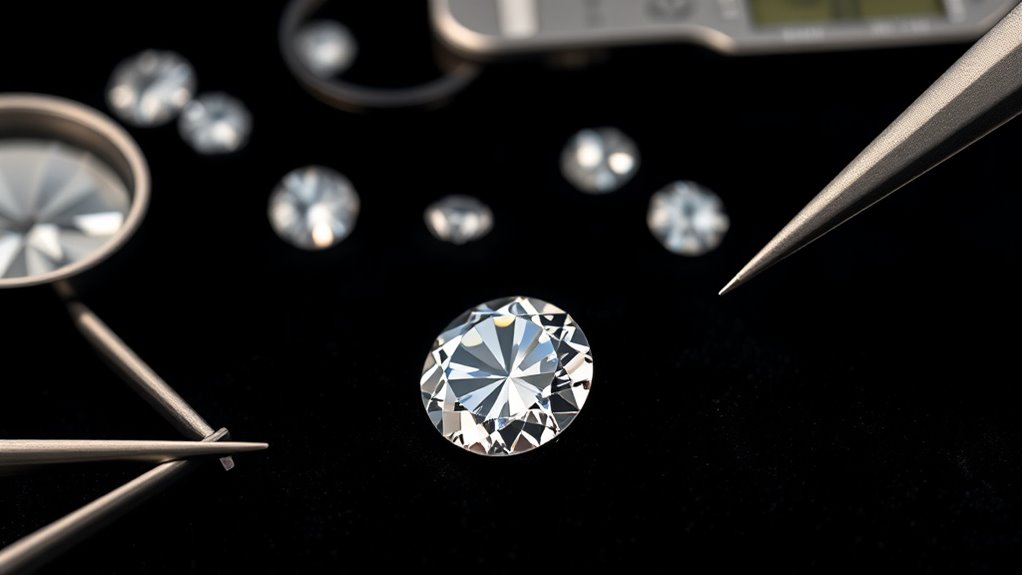
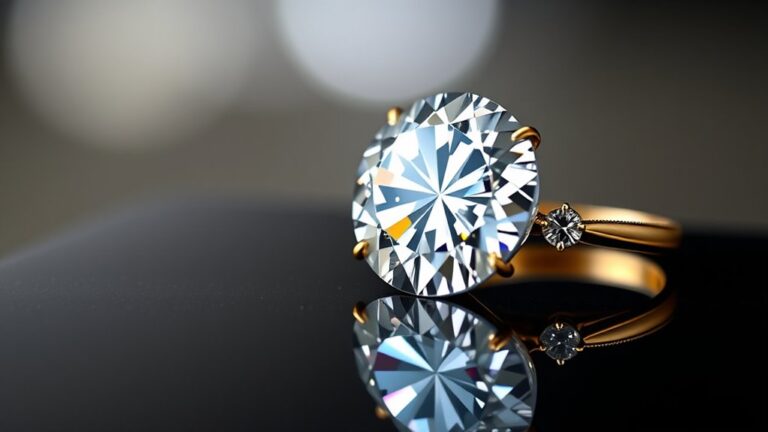
A one-carat diamond stands out because it hits the perfect balance between size and affordability, making it a popular choice for many buyers. When you consider diamond rarity, one-carat stones are unique since they mark a significant size milestone, increasing their value due to demand.
Market trends also play an essential role. As preferences shift, one-carat diamonds consistently maintain steady interest among consumers, keeping their prices resilient. You’ll find that the combination of this size’s visual impact and its accessibility compared to larger carats drives its appeal.
How the Cut of a One-Carat Diamond Affects Its Price
When you’re picking out a one-carat diamond, the cut quality plays a big role in both its price and how much it sparkles. You know, it’s not just about the size; the way it’s cut really makes a difference.
And it’s not only the cut quality—different shapes like round or princess can also change how much you’ll end up paying. So, understanding these little details can really help you get the best value without going over your budget.
Cut Quality Impact
Cut quality plays a crucial role in determining the price of a one-carat diamond because it directly influences the stone’s brilliance and overall appearance. When you choose a diamond, understanding brilliance factors and symmetry importance helps you see why some cuts cost more. A well-cut diamond reflects light beautifully, making it appear more dazzling.
Here’s how cut quality impacts price:
- Superior brilliance factors increase a diamond’s sparkle, raising its value.
- Precise symmetry improves light reflection, enhancing visual appeal.
- Poor cuts reduce brightness, lowering demand and price.
- Premium cuts require expert craftsmanship, which adds to cost.
Shape and Price
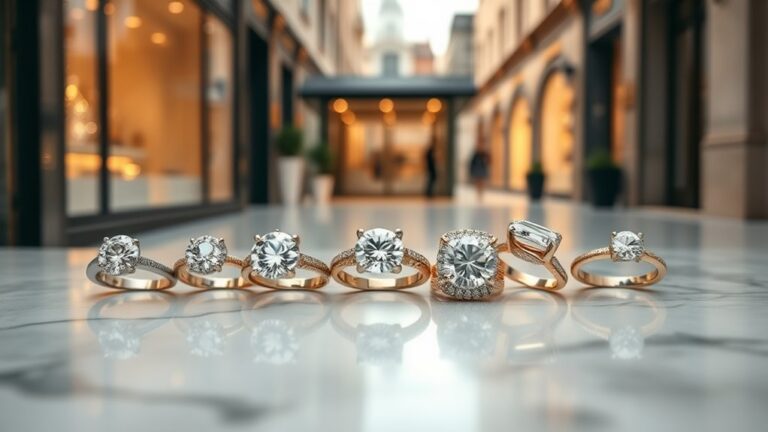
Since diamond shape influences how light interacts with the stone, it plays a key role in determining its price. Different diamond shapes reflect light distinctly, affecting brilliance and overall appeal.
For example, round brilliant cuts typically command higher prices due to their superior sparkle and demand. On the other hand, fancy shapes like princess, cushion, or emerald may show noticeable price variations based on cutting complexity and popularity.
When you choose a one-carat diamond, understanding these price variations tied to diamond shapes helps you make an informed decision. Some shapes may cost less but still offer stunning beauty, while others might be pricier for their optical performance. Ultimately, the shape you pick can greatly impact both your diamond’s look and its cost.
Why Color Grade Changes What You Pay for One-Carat Diamonds
Understanding how color grade affects the price of a one-carat diamond can help you make a smarter purchase. Color grading measures the presence of any tint in a diamond, ranging from colorless to light yellow or brown. This grading directly influences price variations. The rarer the colorless diamond, the more you’ll pay. Here’s why color grading matters for pricing:
- Colorless diamonds (D-F) are scarce and command premium prices.
- Near-colorless grades (G-J) offer a balance of quality and affordability.
- Lower grades show noticeable tint, reducing the diamond’s value.
- Subtle color differences affect resale value and overall investment.
The Role of Clarity in One-Carat Diamond Pricing
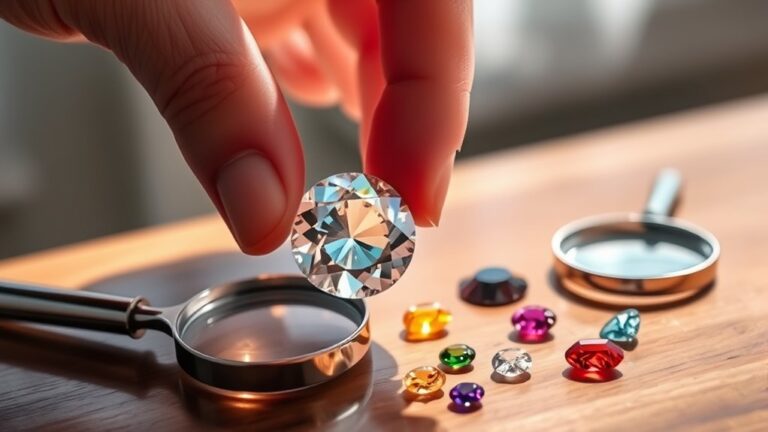
Although many factors influence a diamond’s price, clarity plays an essential role in determining the value of a one-carat stone. When you shop for diamonds, you’ll notice clarity grades range from Flawless to Included, each indicating the presence and visibility of internal or external imperfections.
These clarity grades directly affect the clarity impact on price. You’ll pay more for higher clarity because fewer inclusions mean greater brilliance and rarity. Even minor differences in clarity can greatly change the cost, as clearer stones require more precise cutting and sourcing.
Understanding clarity grades helps you balance beauty and budget, ensuring you choose a one-carat diamond that meets your expectations without overpaying for imperfections you might not notice.
Why Market Demand Can Change One-Carat Diamond Prices
When market demand rises, prices for one-carat diamonds often increase because more buyers compete for limited supply. You’ll notice that shifts in market trends and changing consumer preferences directly impact these prices. Here’s why demand matters:
- Popularity surges in certain styles push prices up.
- Seasonal buying patterns create temporary price hikes.
- Economic factors influence how much consumers spend.
- Marketing campaigns can boost desire, raising demand.
How Natural and Lab-Grown One-Carat Diamonds Differ in Price
Because lab-grown diamonds are created using advanced technology rather than mined from the earth, their prices tend to be considerably lower than those of natural one-carat diamonds. When you compare natural vs. synthetic diamonds, you’ll notice a clear price gap driven by factors like rarity and production costs.
Natural diamonds require extensive mining, which adds to their value, while lab-grown stones can be produced more efficiently, making them more affordable. Market trends also influence this difference; as lab-grown diamonds gain popularity, their prices have gradually decreased, making them an attractive option if you want quality without the hefty price tag.
Understanding these dynamics helps you make an informed choice based on your budget and preferences.
Tips to Get the Best Price on One-Carat Diamonds
Lab-grown and natural diamonds each offer different price advantages, but knowing how to spot the best deals can save you even more. To get the best price on one-carat diamonds, consider these tips:
- Bargain hunting: Shop around online and in-store to compare prices and find discounts.
- Certification options: Always check for reputable certifications like GIA or IGI to guarantee quality and value.
- Negotiate: Don’t hesitate to negotiate prices or ask for added perks like free resizing or warranties.
- Consider clarity and color trade-offs: Slightly lower clarity or color grades can greatly reduce costs without noticeable differences.
Frequently Asked Questions
How Is a Carat Weight Officially Measured for Diamonds?
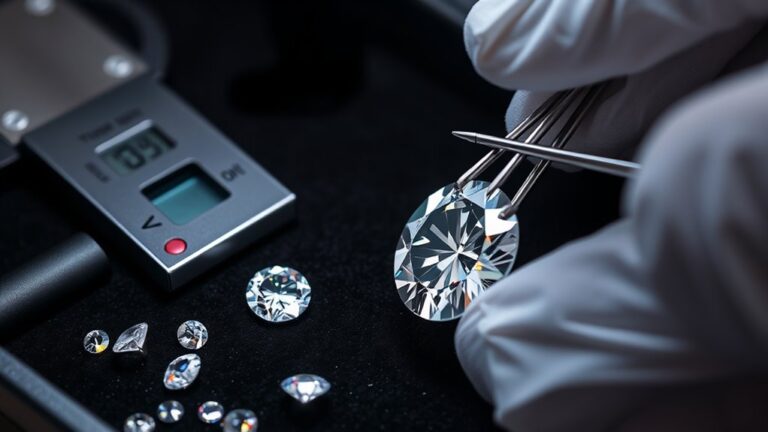
You measure a diamond’s carat weight by using a precise scale designed for gemstones. The carat definition is a unit of weight equal to 200 milligrams.
When you weigh a diamond, you convert its mass into carats using weight conversion to guarantee accuracy. This standard helps you compare diamonds consistently since one carat always equals 0.2 grams, no matter the stone’s size or shape.
What Certifications Should I Look for When Buying a One-Carat Diamond?
You shouldn’t buy a one-carat diamond without checking its certification. Think of it like a knight’s seal of authenticity. Certification importance can’t be overstated because it guarantees the diamond’s quality based on strict grading standards.
Look for reputable labs like GIA or AGS. They provide trusted reports on cut, color, clarity, and carat weight. These certifications protect your investment and confirm you’re getting exactly what you pay for.
How Does Diamond Fluorescence Impact Its Appearance?
Diamond fluorescence impacts its appearance by causing a diamond to glow under UV light. You might notice this glow as blue, yellow, or even white, depending on the type of fluorescence.
While some diamonds show a strong glow that can make them look hazy, others subtly improve sparkle. When buying, you should check how fluorescence affects the stone’s look in different lighting to make sure it matches your style and preference.
Can One-Carat Diamonds Be Resized or Altered After Purchase?
Think of your one-carat diamond as a star in your jewelry universe. It can shine even brighter with the right tweaks. Yes, you can absolutely have diamond resizing and ring alterations done after purchase.
Jewelers skillfully adjust the band size or settings without harming your precious gem. Just remember, resizing too often might stress the metal. So handle changes thoughtfully to keep your diamond’s spotlight dazzling for years to come.
What Are Common Misconceptions About One-Carat Diamond Prices?
You might think all one-carat diamonds cost the same, but that’s a common diamond price myth. The price varies based on cut, color, clarity, and shape, not just weight.
People often confuse carat value misconceptions with actual value. Bigger doesn’t always mean better or more expensive.
You should look beyond carat size to understand a diamond’s true worth and avoid falling for oversimplified pricing assumptions.
Conclusion
When you hold a one-carat diamond, you’re not just seeing a gem; you’re gazing at a sparkling story of cut, color, and clarity. Like a delicate dance of light and value, each factor shapes the price you pay.
Remember, understanding these elements lets you shine with confidence, making sure your investment dazzles as brightly as the stone itself. So why settle for less when you can sparkle with the best one-carat diamond costs?